
Carve-out acquisitions in Indonesia often start with a simple idea: buy a non-core unit from a conglomerate or a state-owned enterprise (SOE), then run it with sharper focus. But “non-core” does not mean “simple.” Indonesia is a primary M&A destination with its own regulatory architecture and deal ecosystem. Global Legal Insights cited Indonesia’s GDP exceeding USD 1 trillion in 2024, and White & Case and Mergermarket data cited 150 deals valued at USD 14.2 billion in 2023. In this setting, carve-outs reward preparation, especially when the asset has been operating inside a larger group with shared people, permits, and contracts.
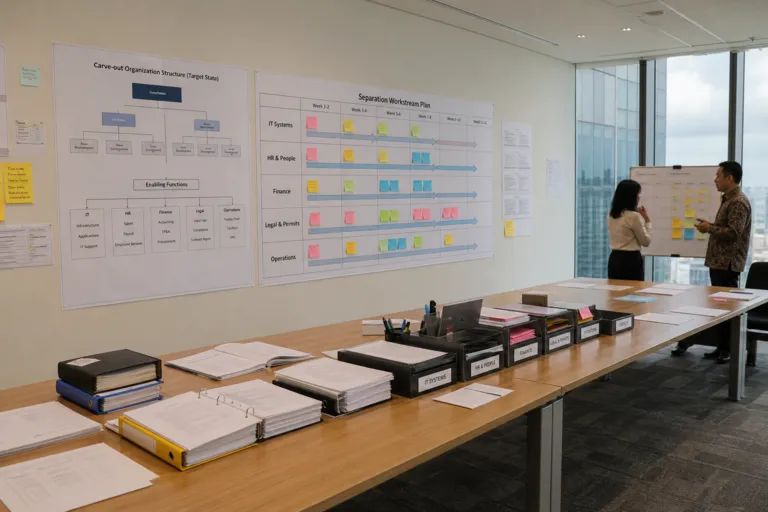
In practice, most surprises come from what was never designed to stand alone. Sellers may need to separate related-party transactions, licenses, land rights, and normalized EBITDA before buyer contact, as Lyndon Advisory notes. Those cleanup themes matter even more in a carve-out, where the unit’s historical performance can be intertwined with group allocations and shared services. Buyers should push early on what the target will look like “Day 1” and what the seller must deliver “Day 0,” including the transition plan for employees, systems, and key operational approvals. This is also where a disciplined disclosure process helps prevent the buyer from losing control of timing and price.
How Indonesia’s Process Rules Shape Carve-out Risk
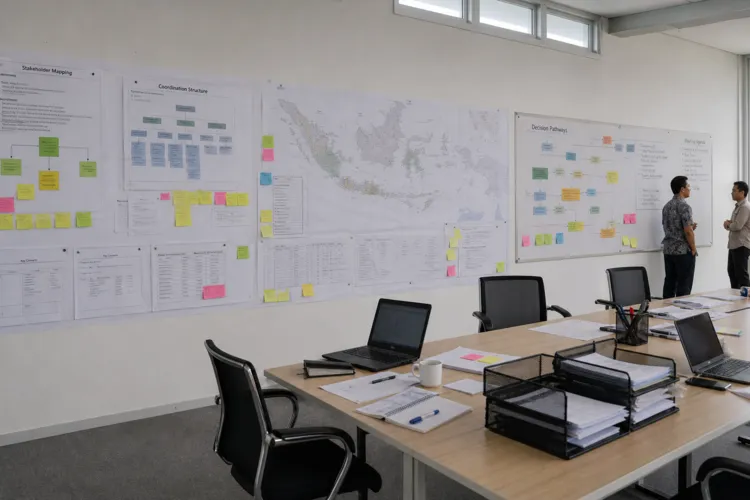
Indonesia does not have a standalone takeover code, according to Global Legal Insights. Instead, transactions are regulated through company law, foreign investment regulations, sector-specific regulations, and taxation rules. The Company Law process described by Global Legal Insights is operationally important for carve-outs: Boards prepare a merger or acquisition plan, employees and creditors must be notified, shareholder approval is obtained through a GMS, relevant notarial deeds are executed, filings are made with the Minister of Law (MOL), and a competition filing with KPPU may apply. A summary of the plan must be published in at least one daily newspaper, and employees must receive a written announcement no later than 30 days before the GMS notice is issued. Creditors have 14 days after publication to object, and objections must be resolved before or at the GMS.
For buyers, these steps influence the carve-out timetable and the condition precedent package. If the seller is an SOE, the broader policy context also matters. The U.S. Department of State notes the Ministry of State-Owned Enterprises (BUMN) encourages SOEs through the SOE Go Global Program to increase investment abroad, aiming to improve supply chains and establish demand for Indonesian exports in strategic markets. At the same time, investors cited by the U.S. Department of State point to remaining barriers such as bureaucratic inefficiency, delays in land acquisition and infrastructure tendering, weak enforcement of contracts, and delays in receiving refunds for advance corporate tax overpayments. Land and title questions can be particularly sensitive, with the Land Acquisition Law No. 2/2012 establishing mechanisms for fair market value compensation and appeals, and the Omnibus Law on Job Creation creating a land bank for priority projects.
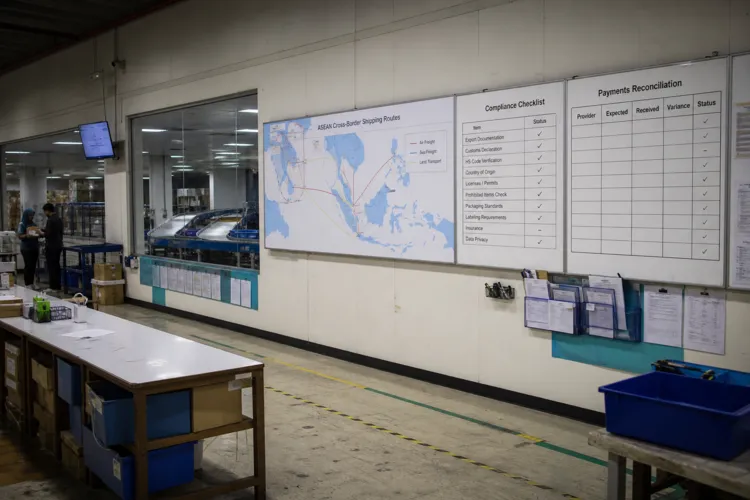
A buyer planning a carve-out acquisition Indonesia strategy should also sense-check the commercial logic against sector realities. For example, Ken Research describes Indonesia’s third-party logistics (3PL) market outlook with an 8.72% forecast CAGR versus a 7.83% historical CAGR during 2020–2025, and it cites 820 million shipment equivalents in 2025 in Indonesia. These kinds of operating metrics can affect how you diligence a carved-out logistics unit’s customer concentration, route density, and service levels after separation. The same mindset applies across industries: in Indonesia, the deal process is rarely only about price. It is about defining separable scope, matching the statutory steps to a realistic schedule, and documenting exactly what must transfer at closing versus what can transition later.
What makes a carve-out acquisition in Indonesia prone to surprises?
What formal steps should buyers expect in an Indonesian M&A process?
How early must employees be notified before the GMS in Indonesia?
How can land and titles affect carve-out deals?
What should a buyer ask when evaluating a carve-out acquisition Indonesia plan in logistics?