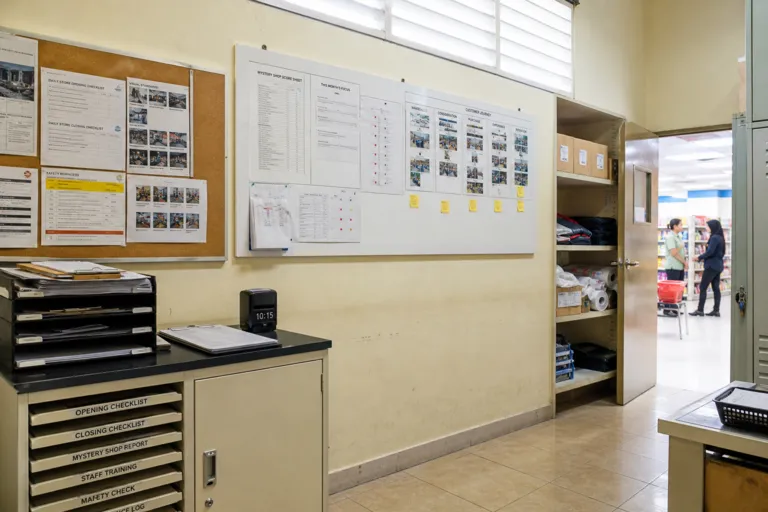
In many organizations, the biggest risk is not a lack of SOP, but a gap between written standards and what happens in front of customers. That is where mystery shopping becomes practical: it measures what your brand delivers when staff do not know an evaluation is taking place. A mystery shopping program sends trained evaluators who pose as ordinary customers through a journey you define, then documents the experience step by step against agreed criteria, often with evidence such as receipts, timestamps, and photographs where the law allows. The result is both a score for each step and a narrative account that explains what the interaction felt like and why specific steps succeeded or slipped.
For teams planning mystery shopping in Indonesia, Sigma Research positions the method as an objective, data-based way to evaluate SOP compliance, service quality, outlet cleanliness, and end-to-end customer experience without relying on internal reporting. Their process describes building a checklist aligned to the client’s SOP, recruiting and briefing mystery shoppers that match the target profile, then running visits or interactions via offline locations and digital channels such as online journeys or customer service chat. Clients receive outlet-level SOP compliance scores, qualitative findings from observed interactions, improvement recommendations based on field results, and performance comparisons across branches when multi-location coverage is included.
Why Omnichannel Mystery Shopping Matters for Execution
Customer journeys increasingly move between stores and digital touchpoints, and the market reflects that shift. Straits Research describes a transition toward omnichannel customer journey evaluations that assess service quality across websites, apps, stores, calls, and digital communication. This same report values the global mystery shopping services market at USD 2.35 billion in 2025, projecting growth from USD 2.48 billion in 2026 to USD 3.75 billion by 2034, with a CAGR of 5.32% over 2026–2034, and notes North America’s 43.9% share in 2025. These figures are global context, but they help explain why Indonesian brands increasingly want one measurement approach that can compare execution across channels instead of auditing each channel in isolation.
Good programs balance consistency with realism. MindMarket emphasizes that evaluators should be real consumers from the target audience, briefed in detail, so visits are harder to spot and less likely to trigger “performance for the clipboard.” The same source frames mystery shopping as a cycle: measure, coach, re-measure; a single wave is a baseline, not a verdict. Operationally, this is reinforced by practical guidance on calibration and scheduling. SI Labs recommends a pilot run where multiple testers execute the same scenario at the same location and reports are compared; if results diverge, the criteria should be revised until reliability is satisfactory. It also recommends distributing visits across different days and times to capture realistic variation.
What do the results look like when you measure consistently? An example from Intouch Insight’s 2026 QSR On-Premises Study shows why a score alone is not enough: across 753 mystery shops spanning 10 QSR brands, 27.9% of guests were not greeted and 27.4% received no parting remark. The program showed an operational baseline, but revealed a human connection gap that teams could act on. That same logic carries into Indonesia: retail can evaluate cashier and sales-floor execution, banking can audit branch SOP compliance, hospitality can audit guest experience, and healthcare can audit patient experience. When you combine scores with qualitative observations, you can connect “what failed” to “why it happened,” then turn findings into targeted coaching and follow-up measurement.
What is mystery shopping and what does it measure?
How can brands run mystery shopping across offline and digital channels?
What does a typical deliverable look like for Indonesian multi-branch evaluations?
How do you make mystery shopping results reliable and comparable?
How should companies approach mystery shopping in Indonesia for ongoing improvement?