Indonesia is described as the world’s largest archipelagic nation, with marine resources that matter for both economic and ecological sustainability. In blue economy terms, fisheries and aquaculture are positioned as core sectors, but they are also burdened by overexploitation and environmental degradation, according to the Resilience Development Initiative (RDI). That tension is exactly what makes the theme underexploited. Capital can help close real gaps, but only where it supports better management and stronger outcomes for coastal communities. This is the starting point for a more investable narrative around Indonesia aquaculture investment: build growth around sustainability rules, credible data, and local participation, not hype.
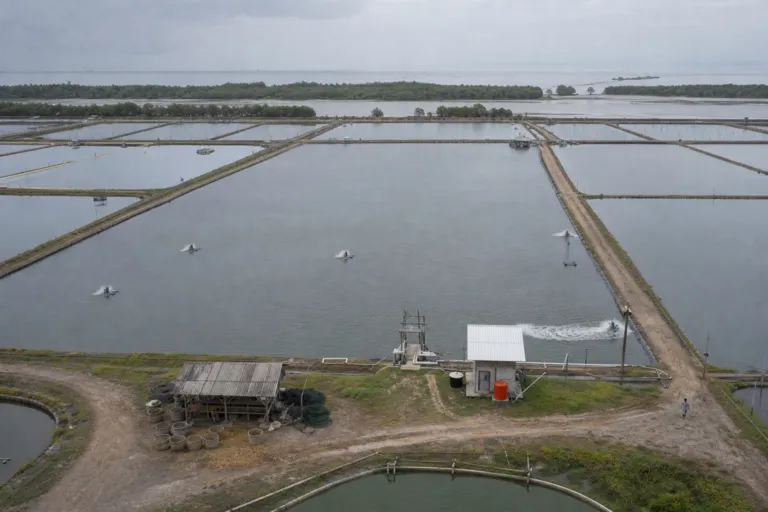
Several sources point to why timing matters. Eco-Business reports that Indonesia’s aquaculture sector is projected to overtake capture fisheries as the primary source of fish by 2030. In the same article, Indonesia is described as having issued the world’s first publicly-offered sovereign blue bond in 2023, intended to finance the sustainable management of ocean and marine-based resources. Yet experts also highlight a bottleneck: businesses have struggled to demonstrate they can scale successfully, and accessing financing remains challenging. Panelists argue technical assistance is needed to drive up harvest success rates, and that funding should favor companies already at a certain scale and “ready to accept the investment.”
What Makes the Theme Investable: Rules, Measurement, and Local Fit
Two research streams help translate “blue economy” into investable structure. A ScienceDirect study introduces a Marine and Fisheries Blue Economy Index (MFBEI) for Indonesia, built as a replicable integrated assessment tool. Using Principal Component Analysis (PCA), it classifies provinces into four clusters and emphasizes tailored strategies to address regional disparities, positioning the index as support for the Ministry of Marine Affairs and Fisheries (MMAF) and its five strategic initiatives. A related paper describes those initiatives as: expanding marine conservation areas, implementing a quota-based fisheries system, monitoring coastal and small island regions, advancing sustainable aquaculture, and addressing marine plastic pollution. For investors, this signals a need to match capital to province-level realities and clear policy tracks, rather than forcing one model nationwide.
Policy execution is also showing concrete movement. The quota-based fisheries system, Penangkapan Ikan Terukur, is described as demonstrating significant progress, particularly in fisheries management area 718. The same source notes increased vessel landings that reduced the need to transport catches back to Java. It also states that marine conservation expansion has resulted in protected areas totaling 97.5 million hectares. These points matter to investment risk because they indicate where governance capacity is tightening, where logistics patterns are shifting, and where operators may face stronger sustainability requirements. They also suggest where data and traceability demands may rise, aligning financing with measurable management improvements.
The underexploited angle becomes clearer when community outcomes are treated as part of the investment case. A ScienceDirect paper on Sasi Laut argues Indonesia’s blue economy vision includes small-scale fisheries and community-based sustainable livelihoods in marine protected areas, and highlights local wisdom in managing fishing areas as an opportunity. But it also says a clear roadmap for operationalizing indigenous systems like Sasi Laut toward modern economic goals is lacking. Separately, a Springer Nature case study on seaweed in Madura notes that blue economic development projects can conflict with coastal community development when decisions insufficiently involve communities, and it points to tenure conflicts between fisheries and aquaculture in South Sulawesi. Investors looking for durable value can treat this as due diligence: back shrimp and seaweed potential, as Eco-Business notes, but design projects that are legible to communities and compatible with shared coastal space. As global context, the same Springer Nature source states global fisheries and aquaculture production reached 214 million tonnes in 2020, underscoring why the sector draws attention beyond Indonesia.
What is the main idea behind Indonesia’s marine and fisheries blue economy approach?
Which government initiatives matter most for aquaculture and fisheries investors?
What concrete progress is cited on fisheries management and conservation?
What is the projected shift between aquaculture and capture fisheries in Indonesia?
How should an Indonesia-focused aquaculture investment thesis account for communities?