Indonesia’s BRICS membership formally began on January 6, 2025, according to a qualitative study in the Journal of Social Research. In this context, BRICS is described as comprising Brazil, the Russian Federation, India, China, and South Africa, and representing over 40% of the world’s population, 25% of global GDP, and 17% of international trade. The same study frames Indonesia’s entry as a strategic effort to expand market access, attract foreign direct investment (FDI), deepen cooperation in technology and infrastructure, and strengthen negotiating leverage in international forums while maintaining a “free and active” foreign policy. It also highlights that Indonesia’s non-oil and gas exports to BRICS reached $84.37 billion in 2024, positioning trade realignment as a near-term, measurable dimension of the policy shift.
UN Trade and Development (UNCTAD) adds a trade-structure lens that helps explain why Indonesia may prioritize intra-bloc opportunities. UNCTAD reports that intra-BRICS merchandise trade exports reached $1.17 trillion in 2024, expanding more than 13-fold since 2003. It also notes that China remains the central driver, and that China, alongside Brazil, India, Indonesia, Russia, and the United Arab Emirates, accounts for the most dynamic trade flows among members. At the same time, UNCTAD says BRICS members collectively account for over two thirds of the global South’s total GDP, while intra-BRICS trade accounts for only about 20% of South-South trade, suggesting untapped potential. For Indonesia specifically, UNCTAD states it is among the three most reliant on BRICS markets, with intra-BRICS exports accounting for over 30% of total exports in 2024.
Where New Demand Meets Old Constraints
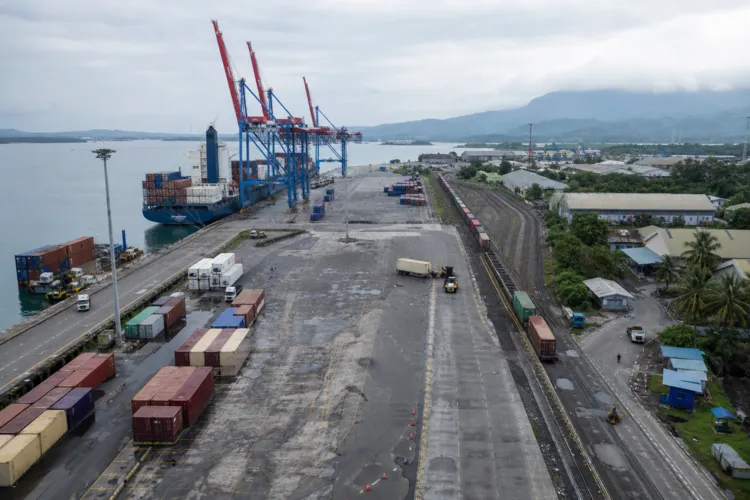
The opportunity set is real, but it is shaped by what Indonesia and other members currently sell to each other. UNCTAD reports that seven of the 10 members—Brazil, Egypt, Ethiopia, Indonesia, Russia, South Africa, and the United Arab Emirates—rely heavily on primary products for over 60% of their exports to other countries in the bloc. The report warns that this dependence has remained largely unchanged over two decades, which can limit structural transformation and export diversification. Still, UNCTAD highlights that some countries, including Indonesia, have made incremental progress toward higher value-added diversification. This combination implies a two-track agenda for Indonesia: use the bloc to deepen existing commodity-linked trade flows, while building pathways to expand manufactured and higher-skill exports within BRICS trade networks.
Sector examples show how market openings can appear through bilateral channels under a BRICS framework. An AInvest report says Russian wheat exports to Indonesia surged 22% in 2024, and that talks to open Indonesian markets to Russian beef and dairy products are advancing. The same source references a 2025 Memorandum of Understanding on Halal certification and describes Indonesia’s Muslim-majority market as a $200 billion opportunity in that context. Separately, Valdai Club argues that BRICS provides Indonesia the opportunity to connect with a market of more than 3 billion people and mentions Indonesian products such as palm oil, coal, and textiles as candidates for wider reach. Valdai also highlights access to alternative resources such as financing from the New Development Bank (NDB) for strategic infrastructure projects, aligning with the Journal of Social Research’s emphasis on alternative financing via the NDB.
Trade realignment is not the same as effortless integration, and multiple sources stress limits. UNCTAD notes that constraints in policy-level cooperation still limit intra-BRICS trade’s full potential, pointing to the need for targeted strategies to strengthen cooperation and build deeper trade networks. The Journal of Social Research similarly flags challenges in maintaining diplomatic balance and managing differing interests among BRICS members, while also noting economic disparities and integration obstacles that can constrain cooperation. A regional lens from ValueChainAsia describes BRICS as a trade-oriented bloc rather than an integrated economy like the EU, and suggests that BRICS expansion could restructure Southeast Asian supply chains by increasing reliance on China–India trade routes and infrastructure projects. In practice, the payoff from Indonesia BRICS membership depends on how effectively Indonesia navigates these constraints while converting market access, financing options, and sector ties into durable export and investment outcomes.
When did Indonesia formally join BRICS, and why does it matter for trade?
How large is intra-BRICS trade, based on UN data?
How dependent is Indonesia on BRICS markets compared with other members?
What does Indonesia’s BRICS membership imply for export mix and diversification?
What new market opportunities are highlighted through Russia–Indonesia trade ties?