Indonesia’s dairy story is increasingly defined by a mismatch: demand growth on one side and constrained fresh-milk supply on the other. One market outlook estimates a 9.5% CAGR for the Indonesia dairy market from 2026 to 2033. Another forecast values the Indonesia Dairy Food Market at USD 5,311 million in 2025 and projects it to reach USD 8,754 million by 2032, implying 7.40% CAGR. A separate dataset puts the broader Indonesia dairy market at USD 28.66 billion in 2024, with a projection of USD 48.31 billion by 2032 at a 7.75% CAGR. Across these views, the investment question is less about whether demand exists and more about how supply chains scale reliably.
Supply constraints are not subtle. One report states local fresh milk production accounts for only 16% of total demand, with most milk and dairy needs met through imports. Other sources describe domestic production meeting roughly 20–25% of total milk consumption, reinforcing the same structural gap. Consumption is also comparatively low, leaving room to grow: milk consumption is cited at 16.27 kg per capita annually, compared with around 26 kg in Vietnam and Thailand, and far below a worldwide average of approximately 100 kg. Drivers named in the sources include population growth, rising disposable income, and government programs focused on improving milk production and distribution, all of which intensify the need to build resilient supply.
Where Investors Can Target the Supply Gap
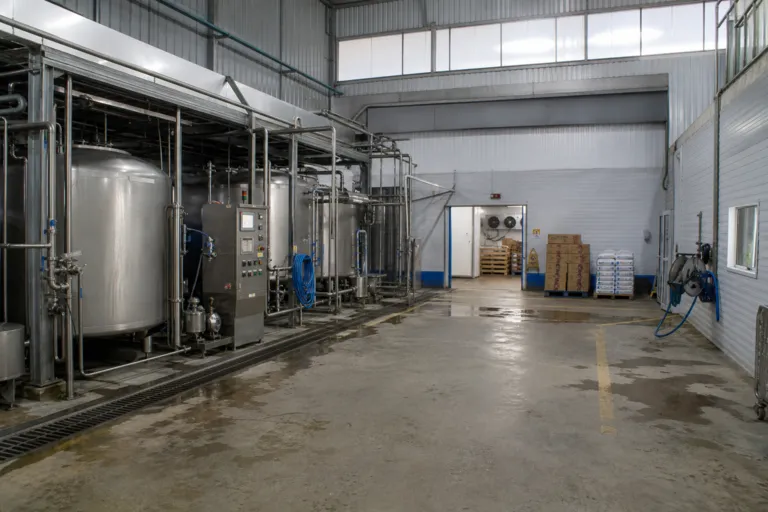
For Indonesia dairy industry investment, the most investable gaps cluster around processing scale, raw-material flexibility, and distribution discipline. The dairy food market description highlights that Indonesia blends domestically collected fresh milk with imported milk powders and other ingredients to produce liquid milk, yogurt, cheese, butter, cream, and cultured products. It also notes processing and raw-milk collection are concentrated on Java, where dairy cooperatives, industrial processors, and modern retail lower collection and distribution costs. In 2025, Indonesia produced approximately 723,000 metric tons of milk, and East Java, West Java, and Central Java are described as central to the domestic milk shed and processor sourcing network. The same outlook states imports will remain essential through 2032, pushing processors to prioritize supplier diversification, UHT capacity, local collection networks, and cold-chain discipline.
One scalable model sits in recombined milk, which is manufactured by blending imported skim milk powder, anhydrous milk fat, and water, with optional ingredients. The recombined milk report links this directly to the reality that domestic fresh-milk supply meets only about 20–25% of consumption, meaning processors can expand using imported raw materials even when local milk is limited. Separately, another source states the supply gap creates opportunities for foreign dairy suppliers, especially in powdered milk, infant formula, and cheese, while also describing smallholder farms in Java and limited cold chain and processing infrastructure. These conditions can favor investments that reduce bottlenecks: industrial processing capacity, reliable chilled logistics, and procurement systems that integrate domestic collection with imported inputs.
Policy and demand programs add another angle for expansion planning. A market overview cites a government initiative to distribute milk, with a total budget of USD 28 billion upon full implementation, aimed at improving nutrition in a context of low milk consumption and a stunting rate of 21.5% among children under five. On the supply side, a USDA report notes that modern large and mid-sized dairy farms increased milk production 20% in 2024 versus 2023 to reach 196,845 MT, partly linked to herd expansion through imports, and aligned with a goal to increase national milk production. For investors, these signals support a thesis focused on capacity and reliability: assets that can serve growing liquid milk demand, expand cultured dairy formats, and keep products available beyond Java through shelf-stable and cold-chain execution.
How big is the supply gap in Indonesia’s dairy market?
What figures show Indonesia’s dairy demand runway?
Which areas look most relevant for Indonesia dairy industry investment?
How fast is Indonesia’s dairy market expected to grow?
What role do government programs play in dairy expansion planning?