Manufacturers in Indonesia are restructuring in an environment where layoffs are being tracked publicly and discussed at the national level. The Ministry of Manpower recorded around 43,000 layoffs through June 2026, and it is monitoring the movement of the figures through monthly employment data while updating and verifying the numbers. Earlier in 2026, the Ministry also reported 15,425 workers laid off between January and April, based on participants registered under the Job Loss Insurance (JKP) programme administered by BPJS Ketenagakerjaan. Even when the pace changes month to month, the policy and reputational spotlight on corporate actions is rising.
For manufacturers, the first step in any restructuring playbook is to define the problem precisely: demand weakness, operating-cost pressure, or a temporary order gap. In the first half of 2025, Indonesia reported 42,385 workers affected by layoffs, a 32.1% year-on-year rise from 32,064 in H1 2024, with losses concentrated in manufacturing, wholesale and retail, and mining. The manufacturing sector alone saw 22,671 layoffs in H1 2025. Officials and reports linked cuts to weak demand, structural shifts, and internal company issues, which means leaders should separate “temporary shock” from “structural reset” before deciding whether headcount reductions are truly unavoidable.
Where to Focus First: Provinces, Plants, and Proof
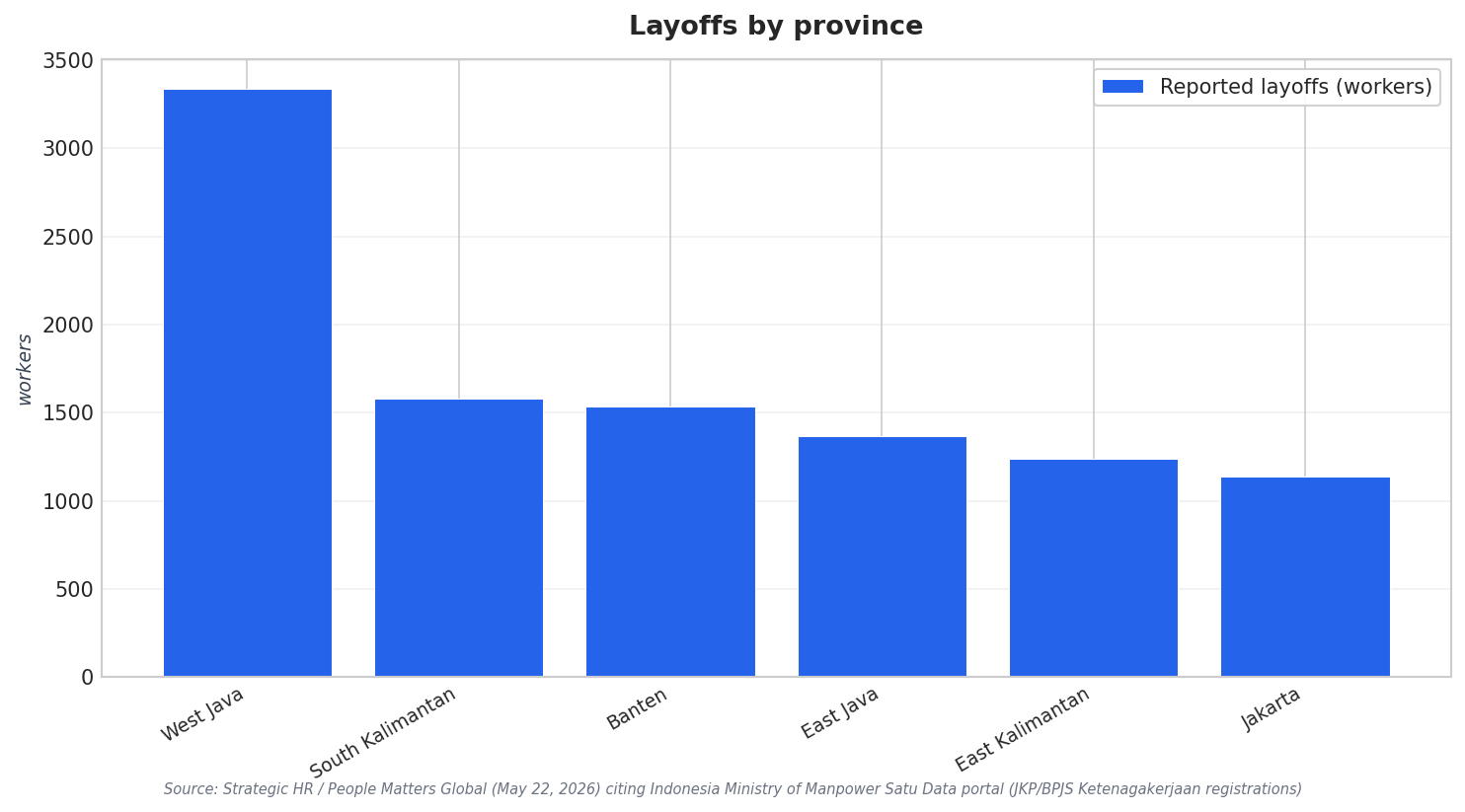
Restructuring should be geographically and operationally targeted, because Indonesia’s layoff wave is not evenly distributed. From January to April 2026, West Java accounted for around 21.65% of reported layoffs nationwide, with 3,339 affected workers. Other provinces with significant layoffs included South Kalimantan (1,581), Banten (1,536), East Java (1,367), East Kalimantan (1,237), and Jakarta (1,140). This matters for manufacturers building an Indonesia manufacturing layoffs advisory approach: use plant-by-plant evidence to justify decisions, prioritize remediation in the most exposed sites, and align local leadership to the realities of each province’s industrial mix and labor relations dynamics.
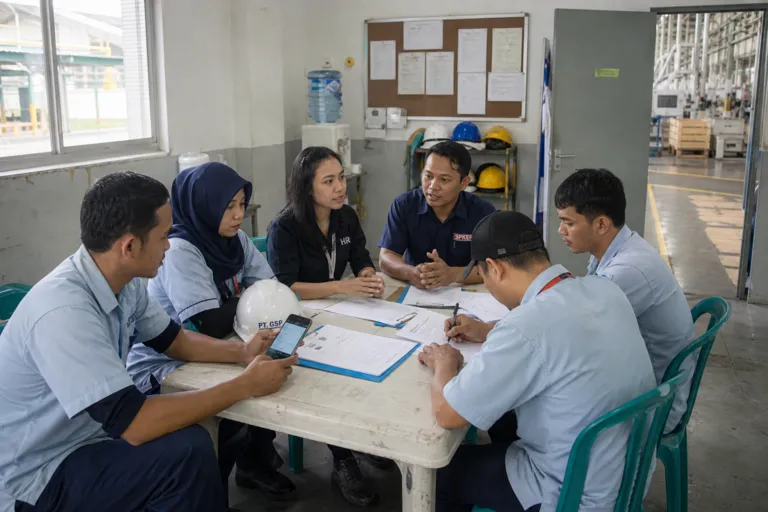
A disciplined playbook also requires a structured “alternatives to layoffs” track, because Indonesian authorities are explicitly pushing for solutions that preserve employment. The Ministry of Manpower has stated a main strategy is to strengthen social dialogue among workers, employers, and the government, aiming to help companies find alternatives to layoffs. One reported case shows what that can look like in practice: Feng Tay, an athletic footwear manufacturer in Bandung, West Java, reportedly almost had to fire 4,000 workers out of a total workforce of around 15,000 after a temporary gap order. After an urgent on-site inspection and mediation involving the President’s Special Advisor on Labor and the Ministry of Manpower, management canceled the planned layoffs and implemented temporary cost-saving measures, while the government reviewed tax relaxation measures to lower immediate production overhead.
Finally, manufacturers should prepare for “hard scenarios” where structural decisions still emerge, including relocation risk and energy-cost sensitivity. Reports cited two automotive companies in East Java seeking to relocate to Vietnam, a move estimated to potentially lead to 11,000 layoffs, with analysts identifying the firms as Jatim Autocomp Indonesia (Pasuruan) and Surabaya Autocomp Indonesia (Mojokerto), both part of Japan’s Yazaki Group and producing wiring harnesses. Separately, Indonesia has a policy that caps the price of industrial gas at USD 6 per MMBtu for seven strategic manufacturing sectors, and manufacturers have warned that removing the cap and reverting to market rates could trigger factory shutdowns and layoffs. A practical restructuring plan should therefore include scenario triggers, documented dialogue steps, and a stabilization pathway if cost pressures or demand conditions improve.
What do the latest 2026 layoff figures show in Indonesia?
Which provinces were most affected by layoffs in early 2026?
How large were manufacturing layoffs in Indonesia in H1 2025?
What is a practical Indonesia manufacturing layoffs advisory step companies can take before cutting roles?
What examples show relocation and cost pressures influencing potential job losses?