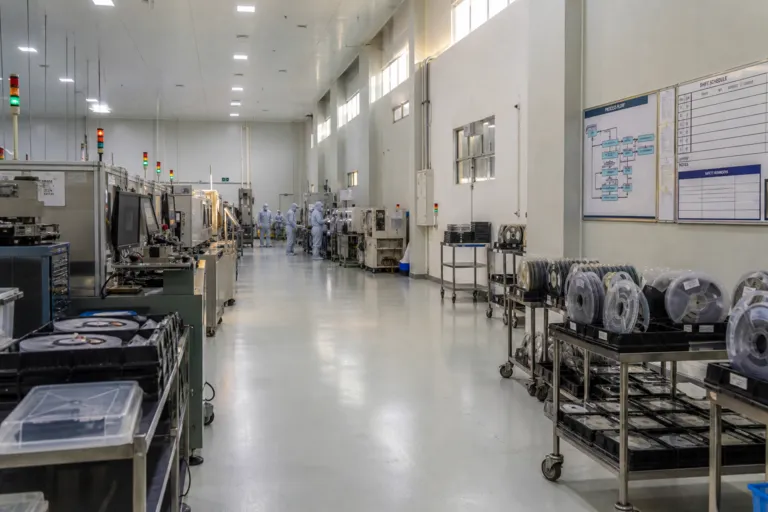
Indonesia’s semiconductor ambition starts from a clear reality: the country is a large consumption market for semiconductor components and devices, but it is structurally import-dependent and has no commercial front-end wafer fabrication (foundry or IDM) located within the country. That dependence shows up in trade flows. ANTARA reported semiconductor imports of US$4.87 billion in 2021, nearly double the US$2.33 billion recorded in 2020. IndexBox also estimates that over 95% of semiconductor devices consumed in Indonesia are imported as finished chips or packaged wafers. Any plan to build a base has to begin with this gap between domestic demand and domestic capability.
Demand signals explain why Indonesia keeps pushing. DHL estimates the Indonesian semiconductor market at USD 5.08 billion in 2025, projected to reach USD 7.07 billion by 2030, with a CAGR of 6.79%. KenResearch separately values the Indonesia semiconductor market at USD 1.5 billion in 2023, also tying growth to consumer electronics and automotive electronics demand and government initiatives. The numbers differ by source and scope, but both point in the same direction: the market pull exists. IndexBox adds an important downstream anchor, estimating Indonesia’s electronics manufacturing sector at over USD 30 billion in annual output, which creates practical demand for chip-related services even before fabrication arrives.
What Indonesia Can Build First: Design, Not Leading-Edge Fabs
The most immediate base to build is fabless design. IndexBox describes Indonesia’s semiconductor fabless market as nascent but accelerating, with an estimated total addressable value of about USD 180–250 million in 2026. It also forecasts 12–16% CAGR through 2035, reaching roughly USD 700–1,000 million by 2035. But the same source is explicit about constraints that shape any Indonesia semiconductor investment strategy: domestic activity concentrates on front-end design, verification, and IP integration rather than physical production. It also cites binding bottlenecks including design talent scarcity and limited access to advanced process nodes (7nm and below), which restricts local firms mainly to mature-node designs (28nm to 180nm) for industrial and consumer applications.
Policy support is part of the story, but execution still matters. IndexBox notes a government push for design localization via the “Making Indonesia 4.0” roadmap and Ministry of Industry initiatives, including tax incentives for R&D centers and design houses, while also stating implementation remains partial. ANTARA similarly frames human capital as central, describing research as the backbone of the agenda while pointing to the need for highly skilled professionals, sustained financial commitment, and advanced technological mastery. KenResearch echoes the same constraint set, highlighting supply chain disruptions, a lack of skilled workforce, and dependency on imported raw materials as challenges to the market’s development.
Indonesia’s ambition also sits inside a global supply chain that is concentrated and politically complex. DHL notes the Netherlands holds over 80% of the global market for lithography machines, describing lithography equipment as critical to manufacturing modern chips. CRIF Asia places global context around the opportunity and risk, citing a 2023 semiconductor market size of approximately USD 530 billion and describing geopolitical fragmentation and export controls as forces accelerating supply chain de-globalization. For Indonesia, the practical takeaway is that building a semiconductor base will likely start with design, packaging choices, and supply-chain resilience, while the hardest part—front-end fabrication—faces the steepest barriers.
How import-dependent is Indonesia for semiconductors today?
What does the fabless opportunity look like in Indonesia?
What is the biggest constraint on building local chip capability?
What should Indonesia semiconductor investment prioritize first?
How big is the market demand signal for semiconductors in Indonesia?