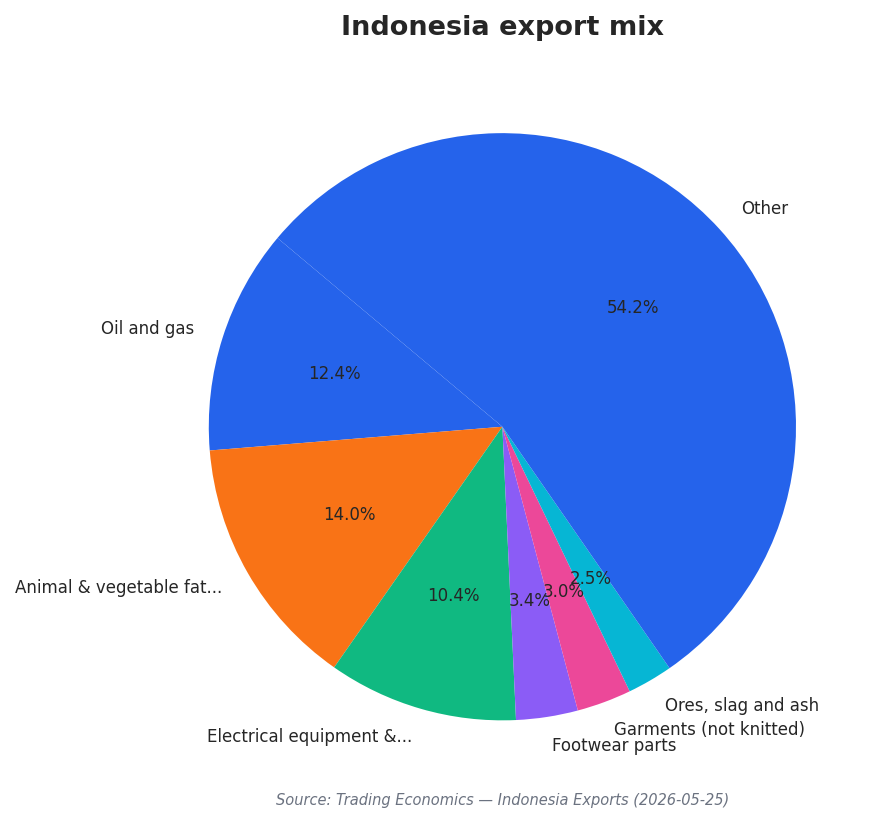
Indonesia’s export profile is still heavily influenced by commodities and a handful of major categories. Trading Economics lists animal and vegetable fats and oils at 14% of total exports, oil and gas at 12.4% (including gas at 6.9%, crude oil at 4.3%, and oil products at 1.2%), and electrical equipment and machinery at 10.45%. This mix matters for how firms approach trade agreements, because preferences are only valuable when exporters can consistently meet market requirements and deliver competitive products. When global demand softens, exporters often focus on keeping volumes moving rather than investing time in the paperwork, certifications, and market analytics needed to convert trade deals into real margin gains.
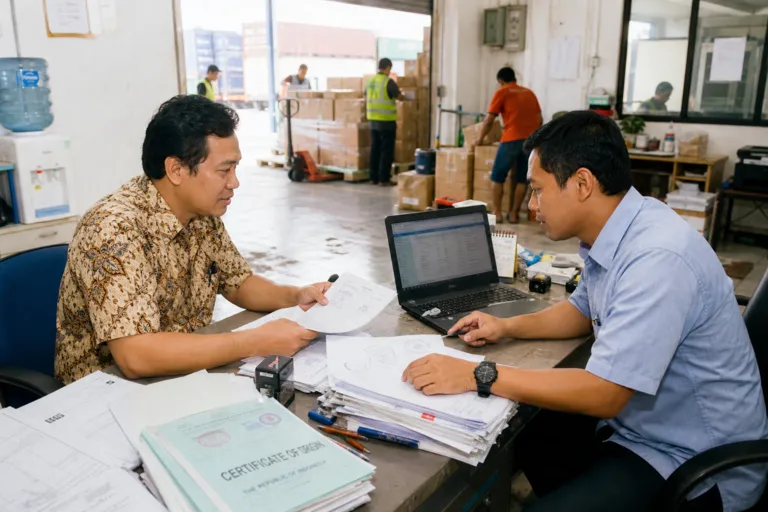
Another reason many firms struggle to capture benefits is that trade frictions are not only about tariffs. Volza’s Indonesia import trade data notes that, even where preferential agreements exist, trade barriers such as import duties, regulations, and non-tariff measures can still pose challenges for international exporters. For Indonesian suppliers selling into demanding markets, licensing, certifications, and other compliance steps can slow shipments or add costs that erase tariff savings. In practice, that means “using an FTA” is not a single decision. It is an operational capability that spans documentation, product standards, and buyer expectations.
A New EU Deal Shows How Detailed Rules Can Decide Who Wins
The recently concluded Indonesia–EU Comprehensive Economic Partnership Agreement shows how detailed implementation can shape outcomes. The Diplomat reports that the agreement awaits review and ratification and is likely to take effect in 2027. Around 80% of tariff reductions are set to take place when it goes into effect, with the rest phased in over five years. The deal also targets non-tariff barriers, including licensing and certifications, and gives an example: if Germany exports a car to Indonesia already certified under EU standards, Indonesia is required to accept that certification and not subject the car to re-testing. These provisions can reduce friction, but only for companies that understand the rules and can align production, documentation, and customer requirements accordingly.
Trade relationships also evolve quickly, which can leave smaller exporters behind. The same Diplomat piece cites central bank data showing Indonesia exported $17.3 billion of goods and services to the EU last year and imported $12.8 billion, while EU investment in Indonesia was $3.6 billion in 2024. It notes Indonesia agreed to remove high duties on certain industrial products imported from the EU, including motor vehicles, machinery, electrical equipment, pharmaceuticals, and chemicals, and to eliminate duties on European agri-food products such as dairy, meat, and processed foods, while rice and sugar remain protected. For exporters, this kind of rebalancing can intensify competition at home and shift buyer preferences abroad, raising the bar for product positioning and compliance.
Finally, Indonesia free trade agreement utilization often depends on how well firms use data to pick markets and prepare compliance steps. TradeInt highlights that Indonesian businesses need both paid and free sources and lists options such as BPS Statistics Indonesia, ITC Trade Map, UN Comtrade, and Satu Data Perdagangan, while also noting a broader strategy focus on industrial downstreaming, expanding strategic trade agreements, accelerating digital adoption, and diversifying export markets. Volza’s export trade data also points to the scale and complexity of logistics, reporting Cengkareng with a 17% share and 9,671,338 shipments and Soekarno-Hatta Apt/Jakarta with a 14% share and 8,169,101 shipments. Without systematic trade intelligence and process discipline, many exporters will keep shipping, but not fully capture preferential advantages.
Why do some Indonesian exporters fail to capture FTA benefits even when tariffs fall?
What does the Indonesia–EU agreement change that could affect exporters’ operations?
When is the Indonesia–EU trade deal expected to take effect?
How can better trade data improve Indonesia free trade agreement utilization?