In post-merger integration Indonesia work, the riskiest moment is often right after closing. Global research cited in integration guides shows why execution discipline matters: 83% of acquisitions fail to boost shareholder returns, and only 14% achieve significant success across strategic, operational, and financial measures simultaneously. KPMG research also found 57.2% of public acquirers ultimately destroyed shareholder value, with total shareholder return dropping an average of 7.4% in the two years following a deal. These numbers are not Indonesia-specific, but they frame a universal reality: the value thesis lives or dies in the integration plan, not the SPA.
Indonesia adds specific post-closing traps because the “soft” integration period now includes hard, penalty-bearing deadlines. A legal checklist focused on Indonesia notes that tax procedural rules, KPPU merger-control enforcement, and post-transaction disclosure obligations administered through the IDX and OJK can turn routine integration steps into compliance risk. The same checklist stresses sequencing: choose the integration structure before closing with the post-closing compliance load in mind, then assign named owners. It also recommends acting on six workstreams in the first 30 days after closing, precisely because regulators and filings do not wait for internal alignment.
Culture and Systems: Where Value Quietly Leaks
Culture and systems are where integration looks “operational,” but becomes existential. One compilation of PMI statistics reports employee turnover hits 47% in Year 1 of an acquisition, described as 3.6x normal turnover. The same source says IT integrations fail or encounter major issues 84% of the time, and that these failures destroy 30–50% of deal value. Frameworks for PMI planning also emphasize that incentives, training plans, employment review procedures, and HR systems shape culture in practice, while technology decisions (for example, which CRM survives) define how fast teams can work together. A practical defense is to set SMART objectives, track non-financial metrics (like employee engagement), and run a comprehensive communication strategy to keep stakeholders informed and engaged throughout the integration.
On the regulatory side, Indonesia’s merger control regime is a common integration tripwire because it requires a mandatory post-closing notification to the KPPU. A 2026 antitrust review warns businesses to assess thresholds, control changes, and local nexus, noting strict criteria, timelines, and penalties for non-compliance, alongside ongoing regulatory updates and a potential shift to a pre-closing regime. The Indonesia PMI checklist is more explicit on timing: qualifying deals must be notified to the KPPU within the statutory window, stated as currently 30 business days after the transaction takes legal effect, and late notification can expose parties to administrative fines. In parallel, the same checklist highlights that tax-neutral reorganisation elections demand contemporaneous records and strict filing sequences, so the tax workstream should be treated as a first-30-days item, not a year-end clean-up.
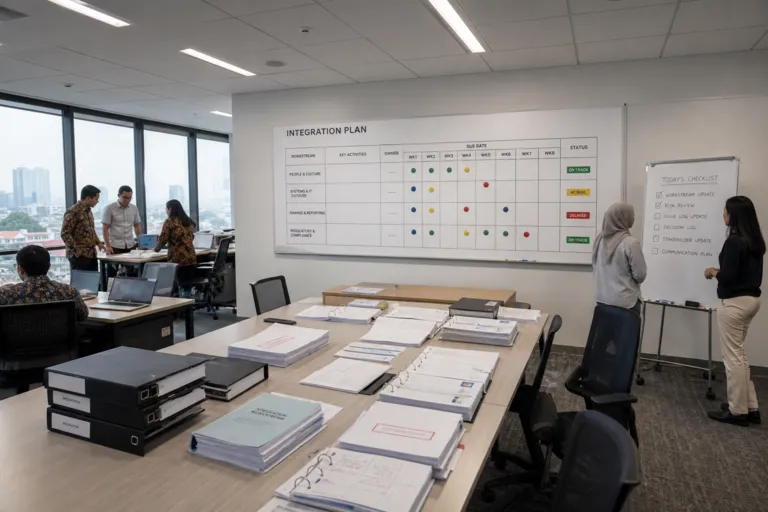
To avoid culture, systems, and regulatory traps at once, link governance to measurable cadence. Integration guidance notes that Day 1 through Day 100 is the highest-leverage window for momentum, morale, and synergy capture, and that planning should start during due diligence rather than waiting until Day 1. One data point is especially actionable: acquirers tracking synergies from Day 1 achieve 92% success rates. Combine that discipline with clear integration structure choices (preservation, holding, absorption, or symbiosis) and with Indonesian compliance owners who can execute filings and documentation on time. The goal is not to “integrate everything fast,” but to integrate what matters, prove it with tracking, and stay ahead of KPPU, tax, and disclosure obligations after close.
Why does post-close execution matter so much in Indonesia-focused PMI?
What is the KPPU timing risk after closing in Indonesia?
What culture and talent signals should integration leaders watch first?
How often do IT integrations go wrong, and why does it matter?
How should companies approach post-merger integration in Indonesia without missing synergy goals?