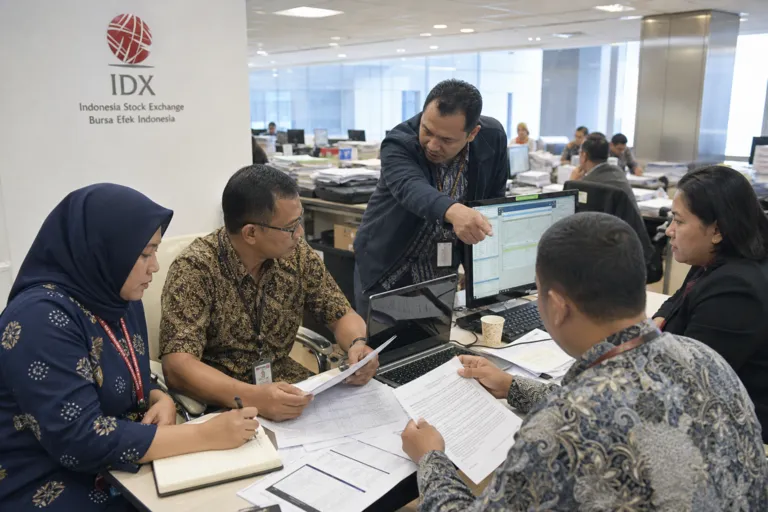
Indonesia’s official carbon exchange platform, IDX Carbon, launched in 2023 under the auspices of the Indonesia Stock Exchange (IDX). For companies exploring the Indonesia carbon market IDXCarbon ecosystem, the first priority is understanding what the exchange actually does in the trading chain. Under PR 110/2025, the carbon exchange (currently implemented by IDX Carbon) is described as the downstream system that records carbon unit ownership and transfers. In practice, this makes participation less about “testing interest” and more about setting up governance: who can approve trades, how carbon units are verified internally, and how the business will document ownership and transfer records across teams.
Businesses also need to read the market signals that are already visible on the platform. As of July 11 (as reported by IDX), cumulative trading reached 1,599,325 tons of CO₂ equivalent, with total transaction value of IDR 7.795 billion (about USD 4.7 million). IDX stated that 90% of buyers are domestic, which matters for companies planning market entry, sales strategy, or counterparty outreach. IDX also reported registered users rising from 16 to 113, and the exchange aims to reach total transaction volume of 3 million tons by the end of the year. These figures help compliance teams and CFOs estimate internal workload and timing, not just potential commercial upside.
What PR 110/2025 Changes Before You Place a Trade
PR 110/2025 is positioned as a shift from a pilot framework to an operational carbon trading system. Lexology explains that, under PR 110/2025, carbon trading can proceed without waiting for Indonesia’s NDC targets. A second change is the move from SRN-PPI to a new Carbon Unit Registry System (SRUK), described as a centralized platform for managing carbon unit data under the NEK framework. The rule states that all carbon trading activities must be registered in the SRUK and may also be recorded on the carbon exchange. For businesses, that means trade readiness is not only about exchange onboarding; it also requires registry readiness, including processes to ensure the carbon units your firm buys or sells are properly registered and traceable.
To trade effectively, companies should align carbon-unit decisions with real operational emissions management. A general carbon-credit definition offered by CarbonCredits.com is that a single credit equals one ton of carbon dioxide to be emitted, or the mass equivalent to carbon dioxide for other gases. It also describes a carbon market as a venue where investors and corporations can trade both carbon credits and carbon offsets. In Indonesia’s policy framing, Lexology describes the system as enabling businesses below a prescribed emissions limit to sell excess carbon units to those exceeding their limits. This is where internal coordination becomes essential: sustainability, finance, and legal teams need a shared view of exposure, limits, and documentation before trading activity begins.
Finally, companies should separate carbon-market trading from other “carbon” discussions that may not match the same scope. One market research source describes the Indonesia Carbon Dioxide Market as valued at approximately USD 1.2 billion and mentions carbon trading markets potentially generating $160 million in future revenue, but that is framed as carbon dioxide market analysis and forward-looking expectations. By contrast, IDX’s exchange figures are concrete, exchange-specific activity numbers, including tons traded, transaction value, and buyer mix. Treat those exchange metrics as your near-term operational reference point, and use other market claims only as context. Before you trade, lock down sign-offs, registry workflows, and evidence trails so carbon units are handled with the same discipline as other regulated assets.
What is IDXCarbon in Indonesia’s carbon trading system?
How active is trading on Indonesia’s official carbon exchange so far?
Who is buying on IDX Carbon according to IDX?
What must businesses do under PR 110/2025 before trading carbon units?
How should businesses approach the Indonesia carbon market IDXCarbon opportunity before trading?