
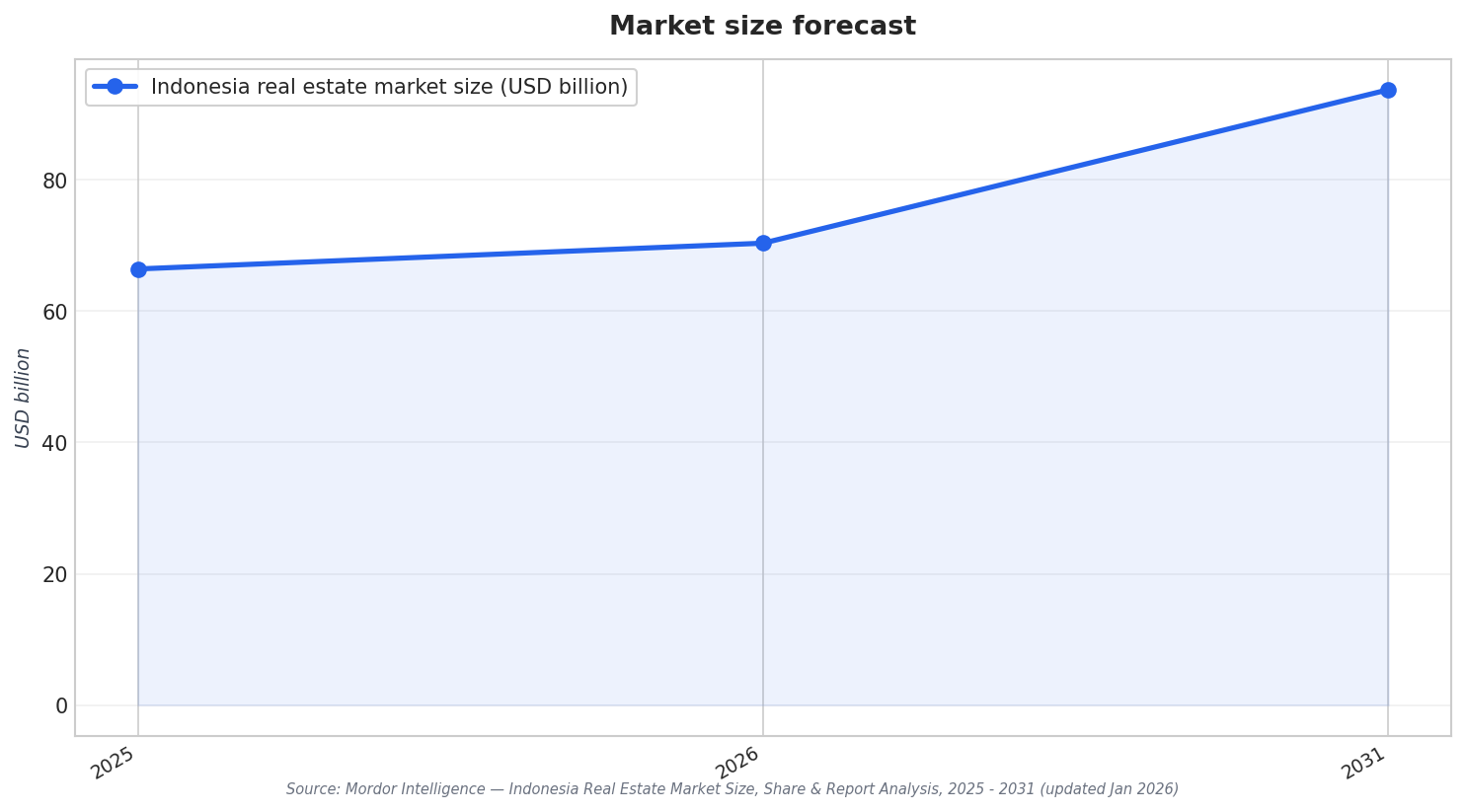
The Indonesia property market 2026 story starts with growth expectations, but it also requires careful reading of the sources. Mordor Intelligence projects Indonesia’s real estate market to expand from USD 66.44 billion in 2025 to USD 70.37 billion in 2026, reaching USD 93.75 billion by 2031, with a 5.91% CAGR from 2026 to 2031. Verified Market Research estimates the market at USD 64.78 billion in 2024 and projects USD 85.97 billion by 2032, with a 5.82% CAGR from 2026 to 2032. NextMSC publishes a much larger estimate, valuing the market at USD 149.2 billion in 2024 and projecting USD 248.7 billion by 2030 with a 7.9% CAGR from 2025 to 2030. These differing frameworks mean sizing should be treated as directional context, while segment mix and behavior offer the clearest signals.
Residential remains the center of gravity. Mordor Intelligence reports residential led by property type with 55.1% market share in 2025, and that individuals and households accounted for 73.7% of the market by end-user. It also notes a sales-led structure, with the sales channel at 72.2% share in 2025, while rental is projected to grow at a 6.84% CAGR through 2031. Demand is supported by urbanization. The report cites that Indonesia’s urban cohort passed 59% of the total population in 2024 and adds nearly 3 million new city dwellers each year, as referenced to the World Bank. It also points to developers offering sub-USD 67,000 two-bedroom apartments that qualify for VAT exemptions, helping stabilize primary residential sales.
Commercial Property in 2026: Logistics Momentum and Mixed-Use Strategy
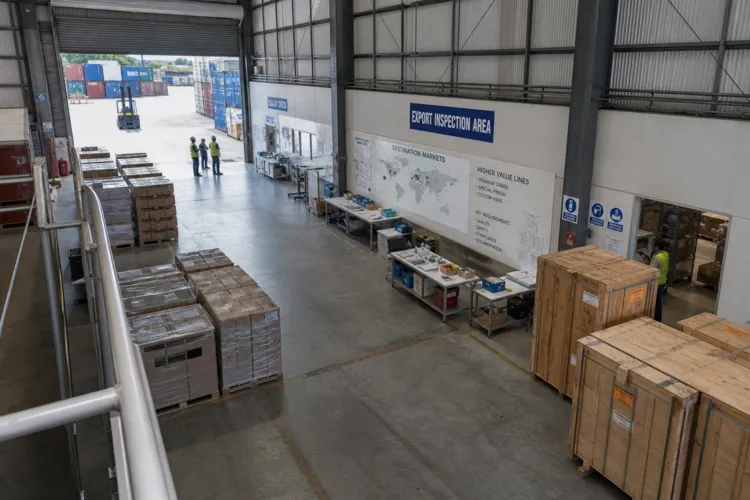
Commercial activity is being reshaped by logistics demand and mixed-use development logic. Mordor Intelligence forecasts logistics properties to grow at a 6.49% CAGR through 2031 and describes “China + 1” manufacturing relocation underpinning long-lease demand for modern warehouses. MarkWide Research adds detail on how Indonesian commercial real estate is structured across offices, retail, industrial estates, and hospitality, and notes that office and logistics segments lead transaction velocity in areas such as Jakarta’s CBD fringe and the Bekasi-Cikarang industrial corridors. It also describes modern logistics facilities as build-to-suit arrangements with floor plates exceeding 2,000 square meters. In practice, it reports e-commerce fulfillment networks are compressing warehouse absorption timelines across Java’s logistics corridors, pushing developers toward more speculative construction.
Policy and regional shifts matter for 2026 positioning. Cushman & Wakefield’s Jakarta MarketBeat Q1 2026 notes the regulation that officially extends the 100% VAT subsidy for residential properties until 2026, while the government has signaled plans to continue it through December 2027 for landed houses priced up to IDR 5 billion, with a subsidy cap of IDR 2 billion. On the capital-markets side, the same report confirms an en-bloc transaction of Pacific Century Place (PCP) Tower (93,300 sqm) in SCBD in Q1 2026, valued at about US$400 million, highlighting that large-ticket deals can still clear. Mordor Intelligence also points out capital shifting from Jakarta to second-tier hubs in West and East Java, and notes DKI Jakarta held 39.4% revenue share in 2025 while East Java is forecast to expand at a 7.11% CAGR through 2031.
Investor sentiment in early 2026 looks practical rather than euphoric. Bamboo Routes reports that locals and market insiders often view asking prices as “optimistic,” with many sellers expecting negotiation, and says most residential properties sell about 5% to 10% below the original asking price. It also flags operational rules that can make or break returns, such as Bali’s requirement for a Pondok Wisata license for legal tourist accommodation and restrictions on Airbnb-style rentals in some Jakarta complexes. For Bali’s short-term rentals, Bamboo Routes reports international arrivals exceeded 6 million in 2024 and cites government targets of 6.5 million for 2025. It also states average occupancy is approximately 43% to 65%, and that well-managed premium villas in Seminyak and Canggu can achieve 75% to 85% during peak seasons.
What are the main 2026 market size forecasts for Indonesia real estate?
Which segment leads Indonesia’s real estate market going into 2026?
What is driving commercial demand in 2026?
How does buyer sentiment affect pricing in the 2026 outlook for Indonesia property?
What should investors know about Bali short-term rental performance and rules in 2026?