Indonesia officially joined BRICS in early 2025, becoming the first Southeast Asian member, according to Wikipedia. That timing matters because the grouping itself is in an expansion phase, now comprising ten countries: Brazil, China, South Africa, Egypt, Ethiopia, India, Indonesia, Iran, Russia, and the United Arab Emirates. The question one year on is not whether Indonesia gained a new diplomatic platform, but whether trade outcomes justify the move. UN Trade and Development (UNCTAD) frames BRICS as a fast-growing set of South-South connections, yet one where policy-level cooperation still constrains the bloc’s full trade potential.
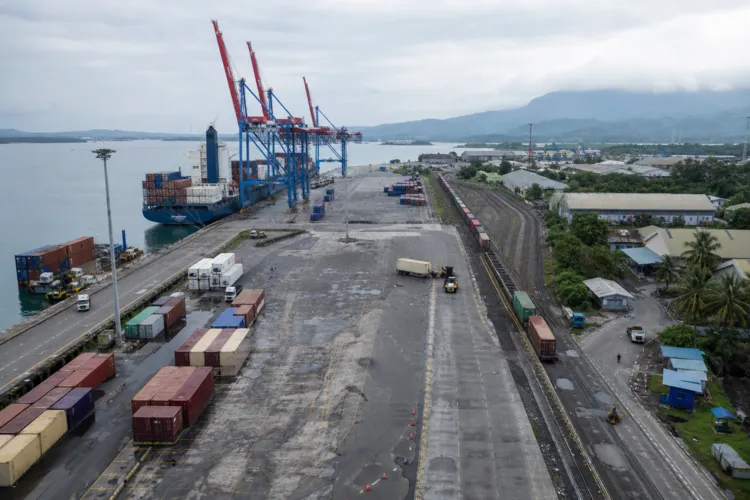
On the trade side, UNCTAD reports that intra-BRICS merchandise trade expanded more than 13-fold since 2003, with exports reaching $1.17 trillion in 2024. That aggregate growth is the backdrop for assessing the Indonesia BRICS trade impact, because it shows the bloc’s internal market is already large and still evolving. UNCTAD also says China is the central driver and, alongside Brazil, India, Indonesia, Russia, and the United Arab Emirates, accounts for the most dynamic trade flows among members. Yet UNCTAD cautions that, relative to BRICS members’ scale and capacity, intra-bloc trade potential remains underused.
Where the Trade Gains Look Real—and Where They Look Limited
For Indonesia, UNCTAD’s dependency indicators point to meaningful exposure to BRICS markets rather than a marginal relationship. It identifies Brazil, Russia, and Indonesia as the three countries most reliant on BRICS markets, with intra-BRICS exports accounting for over 30% of their total exports in 2024. This suggests Indonesia’s commercial ties with the bloc predate membership and can support the case that formal participation matches existing trade gravity. A separate qualitative study in the Journal of Social Research also states that Indonesia’s non-oil and gas exports to BRICS reached $84.37 billion in 2024, framing market access as a concrete benefit discussed in policy circles.
But the same UNCTAD report highlights why bigger trade numbers may not translate into a step-change in development outcomes. Across the ten members, seven countries—Brazil, Egypt, Ethiopia, Indonesia, Russia, South Africa, and the United Arab Emirates—rely heavily on primary products for over 60% of their exports to other BRICS members. UNCTAD warns this dependence has remained largely unchanged over two decades, underscoring persistent challenges in structural transformation and export diversification. It notes that some countries, including Egypt and Indonesia, have made incremental progress toward higher value-added diversification, but that progress is described as incremental, not a decisive shift.
The geopolitics-versus-trade debate is also shaped by how analysts describe BRICS itself. Britannica writes that BRICS aims at greater economic and geopolitical integration and coordination, but that its actual power can be undermined by deep internal problems in core member states. Research articles hosted on ResearchGate similarly argue that the economic benefits of BRICS membership may be overstated because Indonesia already has substantial ties with BRICS countries and participates in other multilateral forums, while membership also requires careful balancing of a long-held non-aligned stance and ASEAN-centric diplomacy. One year on, the strongest conclusion supported by the sources is that Indonesia’s trade links are real, but the transformative payoff depends on overcoming commodity dependence and coordination limits that BRICS has not yet solved.
When did Indonesia officially join BRICS?
What does UNCTAD say about intra-BRICS trade growth?
What is the clearest indicator of Indonesia’s BRICS trade exposure?
Does the evidence suggest Indonesia’s BRICS trade impact is mostly commodities or diversification?
Is BRICS membership framed as more economic or geopolitical in the sources?