For deal teams tracking Indonesia M&A trends 2026, the clearest signal is the global split between very large deals and a more constrained middle market. PwC’s 2026 mid-year outlook says global deal value is on track to hit $4tn in 2026, up by about 13% year-on-year, even though deal volumes are declining. PwC also notes that transactions above $5bn have made up almost half of total global deal value so far this year, which is double their share just two years ago. That global “K-shaped” pattern matters for Indonesia-bound capital because it influences what buyers can pay, how they finance, and which strategic stories receive the most attention.
Indonesia-specific sources describe why companies keep using M&A even when pricing and financing feel harder. Cekindo says companies in Indonesia are leveraging M&A to expand their customer base and enhance operational efficiency, and it ties this to a robust domestic market, rapid digitalization, and an evolving regulatory landscape. It also stresses that deal structure shapes how ownership is transferred, risks are handled, and control is gained, and that the “best option” depends on the investor’s goals, the industry, and local rules on foreign ownership. Lexology’s Indonesia in-depth guide highlights that M&A outcomes are closely linked to legal and regulatory frameworks, reinforcing why valuation work in Indonesia cannot be separated from execution feasibility.
2026 Valuation Drivers: Scale, AI Exposure, and Execution Risk
In 2026, valuation discussions are increasingly shaped by “supersize” economics and AI-linked infrastructure priorities at the global level. PwC says just four companies—Alphabet, Amazon, Meta, and Microsoft—are expected to spend more than $700bn in 2026 to build AI infrastructure. In the same outlook, PwC says AI is redirecting capital toward data centres, power, and grid infrastructure while forcing buyers to reassess which sectors and business models are most exposed to disruption. For Indonesia-target deals, that translates into practical valuation drivers: buyers may pay more for assets that support resilience, scale, and strategic transformation, but apply heavier discounts where business models look exposed to AI-driven change or where execution requires scarce capital.
Global comps also show what “big” looks like and how much it can move market averages, which is useful when setting expectations for Indonesia processes. Dealroom summarises that total global deal value rose by 12% in 2024 to $3.4 trillion, and average global deal value rose 4% to $443 million. It also notes that deals valued at $2 billion or more rose by 20% year-over-year in 2024, even as overall deal counts declined. PwC adds that if you strip out megadeals, 2026 deal value is down by 4%, while megadeal value is on track to increase year-on-year by 40% if the current pace continues. The practical takeaway is that valuation ranges can widen, with premium pricing concentrated in fewer, larger, strategically framed transactions.
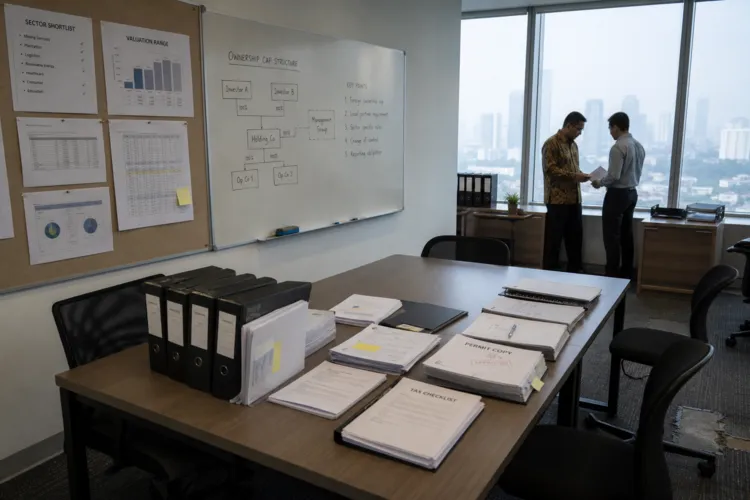
Execution and diligence are also becoming valuation drivers, not just procedural steps. PwC says the capability to streamline and accelerate the deals process is already in place, touching target screening, due diligence, valuation, and value creation. TCF Indonesia emphasises that due diligence is crucial because it evaluates the financial, commercial, regulatory, and other situations of potential merger candidates and helps quantify risks of not meeting targets. Combined with Cekindo’s point that deal structure determines risk allocation and control, Indonesia valuations in 2026 are likely to hinge on how quickly parties can validate assumptions, address regulatory and foreign ownership constraints, and reduce uncertainty that otherwise feeds into a price discount.
What is the big-picture outlook for Indonesia’s M&A market in 2026?
How do megadeals influence valuations relevant to Indonesia transactions?
What valuation drivers are most tied to AI in 2026?
Why does deal structure matter in Indonesian M&A pricing?
How should buyers approach Indonesia M&A trends in 2026 when doing due diligence?