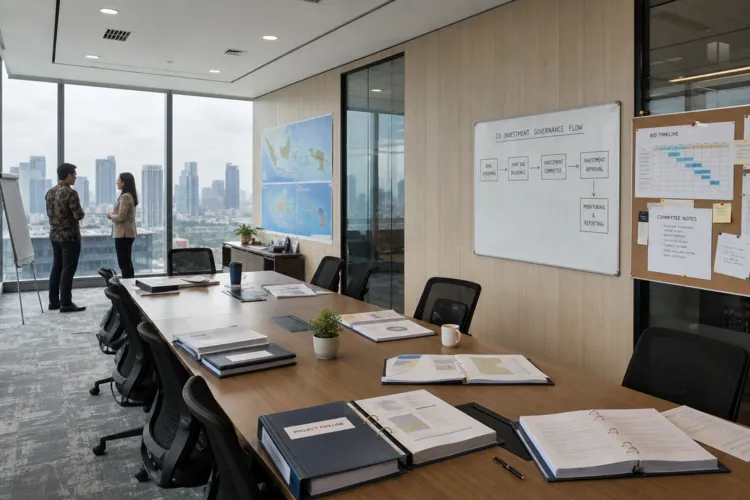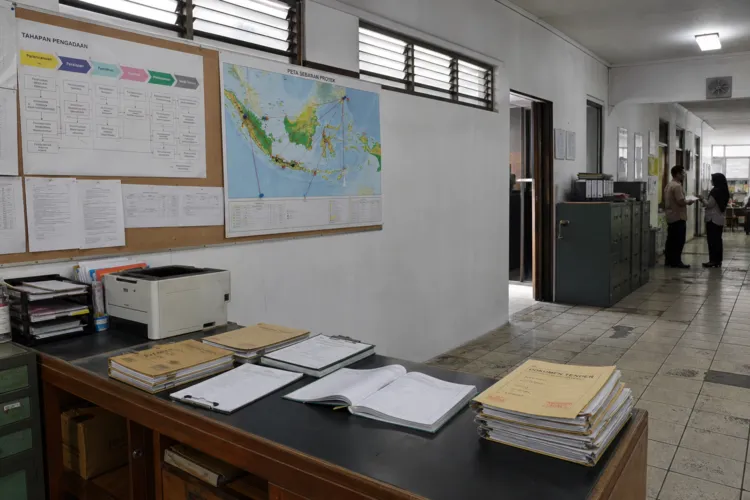
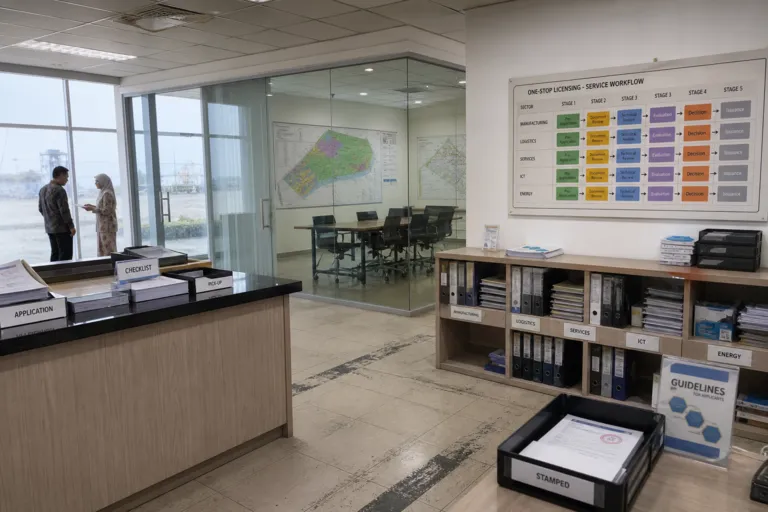
Choosing a location in Indonesia can be harder than it looks. Sources point to challenges such as complex regional policies, high logistical costs, and fragmented communication systems that can slow down investment decisions. Indonesia’s Special Economic Zones (KEK) are positioned as a structured shortcut. They act as regulatory enclaves where rules around taxes, customs, and labor are suspended or simplified to create a higher-efficiency business environment. Several sources also highlight that companies in SEZs can benefit from 100% foreign ownership and may be eligible for tax holidays. For manufacturers and investors, that combination changes both risk and speed to market, compared with operating in general territory.
Start any Indonesia special economic zone comparison by separating what an SEZ is from what a standard industrial estate is. Under Law No. 39 of 2009, Indonesia created a distinct legal category for clearly defined areas designed to attract investment with benefits not available elsewhere. One practical differentiator is governance. Each SEZ is overseen by a Management Board with direct authority to issue licences, process permits, and liaise with central government agencies, supported by a single-window licensing system. This structure is positioned to compress approval timelines that would normally take many months into a significantly shorter period, which matters most for regulated activities such as medical devices and healthcare services where approvals are numerous and mandatory.
How to Compare Indonesian SEZs: 4 Filters That Matter Most
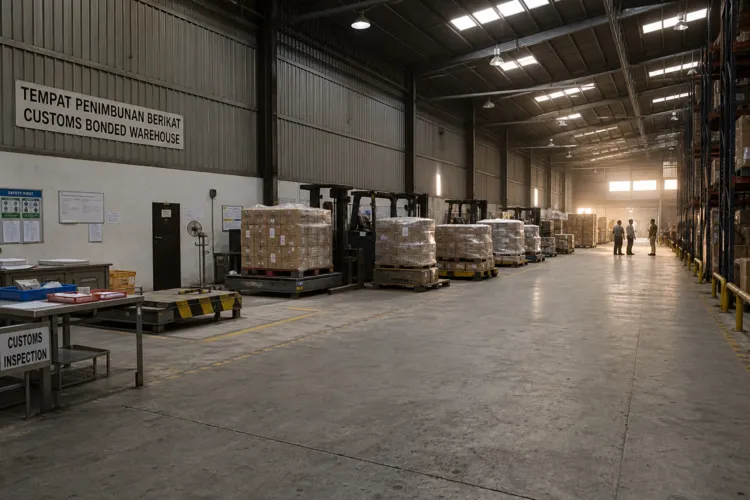
First, match sector focus to your business model, because incentives can depend on alignment. Since 2009, the government has established 24 SEZs across Indonesia, with 20 fully operational and the rest in development, covering sectors such as healthcare, education, manufacturing, tourism, and entertainment. Sources note that the most substantial incentives are typically reserved for investors whose activities align with the SEZ’s focus. A manufacturing company in a manufacturing-focused SEZ may qualify for both tax holidays and tax allowances, while other activities in the same SEZ might only receive tax allowances. Second, confirm incentive certainty and the application path, because incentives are not automatic. Third, assess operating friction: the SEZ application system is integrated with IT inventory requirements and connects to the Indonesian National Single Window (INSW) and customs and tax computer service systems. Fourth, decide your role: sources describe options to invest as a tenant, as a developer in a joint venture, or as an infrastructure developer inside or around an SEZ.
Use investment and employment signals as a reality check. By June 2023, investments in SEZs reached IDR 128.5 trillion (USD 8.5 billion), creating 71,349 new jobs through 291 businesses. Another source, citing Jakarta Globe, states that since the programme’s inception SEZs have secured more than USD 16.2 billion in cumulative investment involving over 400 businesses. As of the third quarter of 2025, 351 companies and investors had committed a combined Rp 314 trillion ($18.7 billion) in SEZ investment. A separate study reported that SEZ regions attract up to 77% more investment and create around 4% more jobs than regions without SEZ status, and gave an illustrative example: a 10,000-worker project outside an SEZ could involve up to 15,000 workers in an SEZ. Treat these figures as directional indicators for momentum, and then validate fit at the zone level.
Finally, avoid confusing SEZ selection with industrial-estate selection, even though both affect manufacturing outcomes. One industrial-estate source highlights trade-offs manufacturers face inside Java. It describes the Surabaya-Gresik-Sidoarjo corridor as the second-largest concentration of manufacturing clusters in Java, with Surabaya Industrial Estate Rungkut (SIER) positioned as one of the best industrial zones for machinery manufacturing. It also warns that cost advantages can be offset by lower supply chain density and longer logistics routes to Jakarta’s distribution networks. For precision machinery under KBLI 28220, the same source notes that a single unplanned power interruption can generate scrap costs of USD 5,000 to USD 20,000 per incident. For SEZ decisions, use these operational realities as an additional filter alongside sector focus, licensing speed, and incentive eligibility.
What makes an SEZ in Indonesia different from a standard industrial estate?
How should manufacturers approach an Indonesia special economic zone comparison?
How many SEZs has Indonesia established, and how many are operational?
What investment and jobs outcomes have been reported for Indonesia’s SEZs?
Are SEZ incentives automatic once a company locates in a zone?