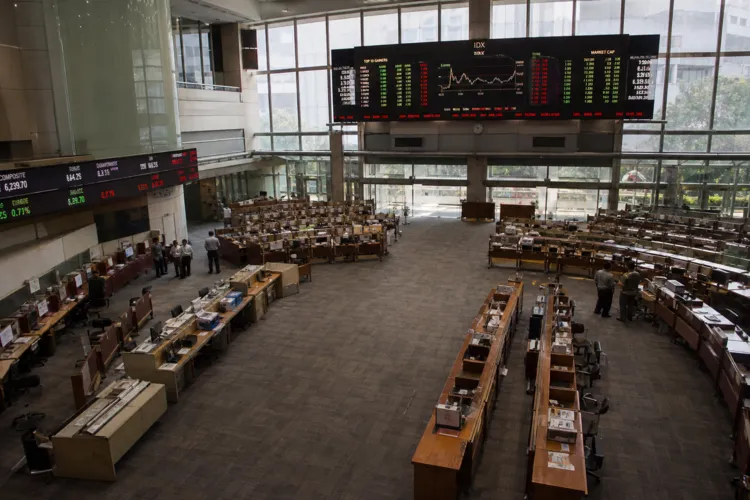
Indonesia is often framed as a major demographic opportunity, with a population of more than 275 million and a working-age cohort that has been expected to fuel growth. But multiple signals show the window is tightening. Statistics Indonesia (BPS) reported the total population reached 284.67 million in 2025, growing at an annual average rate of 1.08% over the last five years, even as fertility keeps falling. The total fertility rate declined from 2.41 children per woman in 2010 to 2.13 in 2024, near the replacement level of 2.1. At the same time, Asia Times notes a broader global shift: by around 2030, for the first time ever, the total number of people under 25 will start to shrink.
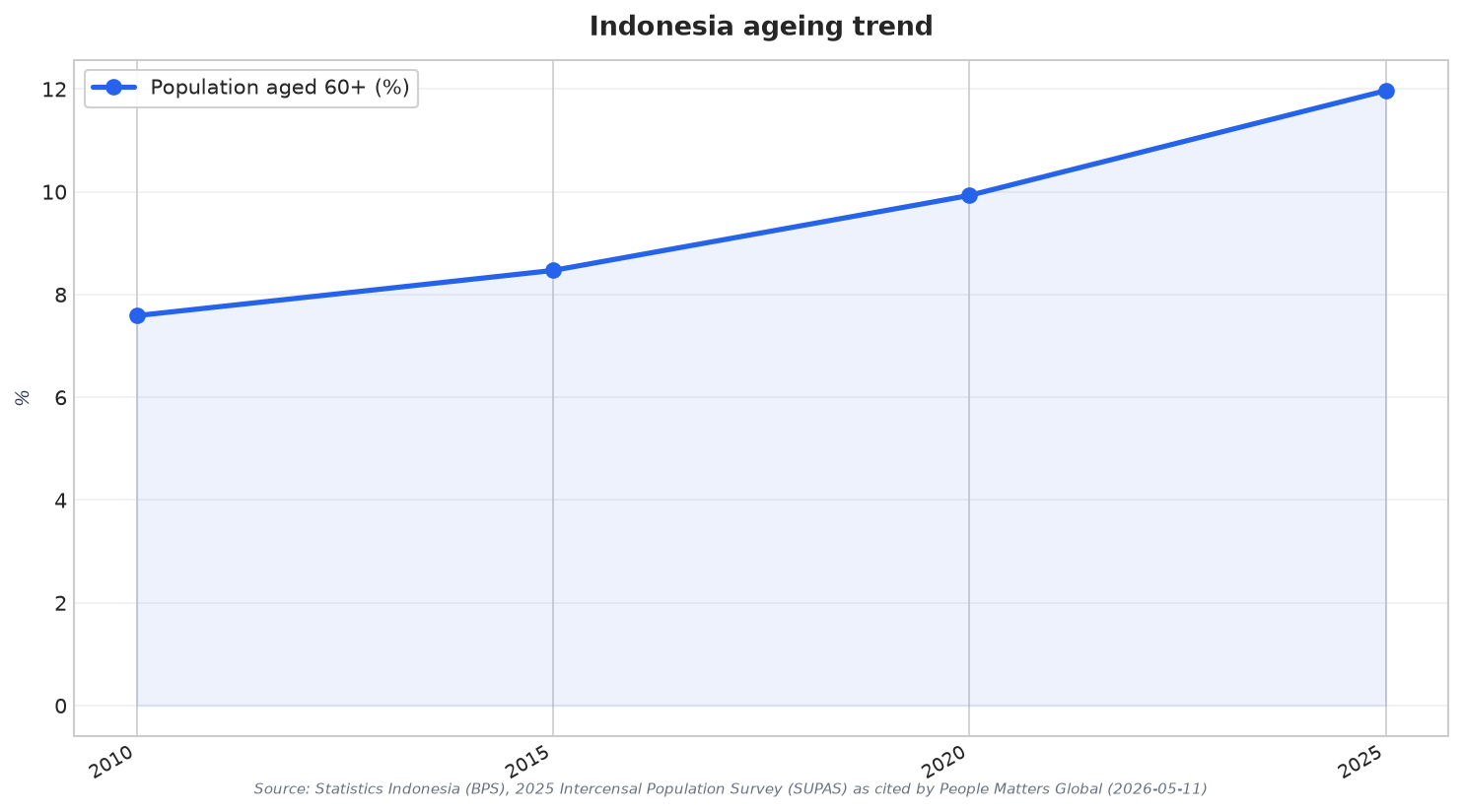
Ageing is no longer a distant risk. The 2025 Intercensal Population Survey (SUPAS) cited by People Matters Global shows 11.97% of Indonesians are now aged 60 and above, surpassing the 10% threshold commonly used internationally to classify an ageing society. The rise has been steady: 7.59% in 2010, 8.47% in 2015, 9.93% in 2020, and nearly 12% in 2025. The productive-age population (15–64) has also begun to slip after peaking at 69.28% in 2020, declining to 68.94% in 2025. Bappenas projections cited by ANTARA indicate the 15–64 share is expected to fall from 64.61% in 2025 to 60.22% by 2045, reinforcing that the demographic dividend is time-bound.
Why Job Quality and Productivity Matter More Than Headcount
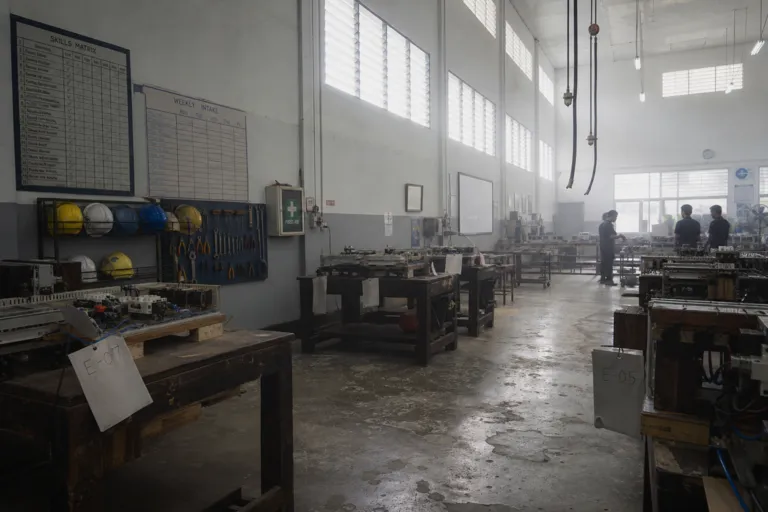
A narrowing window makes the structure of employment decisive. People Matters Global reports nearly 60% of workers remain in the informal sector, where pension coverage and tax contributions are limited, and it also notes the dependency ratio reached 45.05 in 2025, meaning every 100 productive workers support around 45 non-working-age individuals. Asia Times argues that the traditional development model of absorbing surplus labor into low-cost manufacturing is less effective as supply chains fragment and automation becomes cheaper, and it cites Asian Development Bank data showing manufacturing’s share of GDP has stagnated over the past two decades. EBC Financial Group adds a sharper labor-market signal: textile and garment producers laid off approximately 126,000 workers across 59 companies by late 2025, and manufacturing represented nearly 40% of all reported layoffs in 2025.
This is why workforce planning has to move beyond expanding participation and into building capabilities that raise output per worker. ANTARA reports that ICT professionals account for only about 0.8% of Indonesia’s total workforce, based on data presented by Coordinating Minister for Economic Affairs Airlangga Hartarto in late July 2025. The same source says Airlangga projected Indonesia’s digital economy could reach US$600 billion by 2030, but it warned that growth depends on an adequate supply of digital talent. Asia Times also points to persistent skills gaps, citing the OECD’s PISA national report highlighting weaknesses in foundational skills that could limit the move up the value chain. Together, these signals suggest the Indonesia demographic dividend workforce agenda must be a productivity agenda.
Timing is the core risk. The Jakarta Post writes Indonesia has enjoyed a demographic bonus since 2012, with the opportunity expected to remain open until 2035, and it estimates that by 2030, 68.01% of the population (approximately 294.11 million people) will be of working age. Other timelines are even tighter: EBC Financial Group says Indonesia’s demographic window is projected to peak around 2030 and close near 2041, while IFG Progress (2021), cited by the Jakarta Post, projects the bonus will conclude in 2038 and that the dependency ratio is projected to reach 51.33% by 2040. Asia Times adds that Indonesia’s labor force is expected to exceed 200 million by 2045. With these overlapping countdowns, the choice is clear: accelerate skills, mobility, and formal job creation now, or face ageing pressures with too many workers stuck in low-productivity work.
When does Indonesia’s demographic bonus window end?
What numbers show Indonesia is entering an ageing phase?
How does informality affect readiness for ageing?
How large is the digital talent gap in Indonesia’s workforce?
What should an Indonesia demographic dividend workforce plan focus on now?